
What it is
Overview
A developer framework for building AI agents that handle real-time voice and video interactions. LiveKit provides SDKs and infrastructure for multimodal AI applications — agents that can see, hear, and respond through voice, video, and physical device connections. The hybrid build combines real-time media processing with AI model integrations. Backend developers and AI engineers use it to create production voice assistants, video call bots, and interactive AI systems that need sub-second response times.
At a glance
Usability & Quality overview
Best for
- developer-built voice agents
- multimodal realtime apps
- teams that want control over their communication stack
Watch out for
- Technical setup is required
- Edge cases may need tuning in poor networks
Real product, not a wrapperIndependent product
LiveKit provides specialized real-time infrastructure for voice and video AI agents, including proprietary end-of-turn detection models and comprehensive SDKs. This goes well beyond simple API wrappers, offering genuine workflow automation and technical capabilities that ChatGPT alone cannot replicate.
Strong evidenceQuality score
LiveKit powers realtime voice, video, and AI agents with strong developer control and low latency.
This score is our editorial judgment, computed automatically from the sources, weights, and dates shown above. It reflects the data we could verify as of August 4, 2026, not a guarantee or statement of fact about LiveKit. Third-party ratings and quotes belong to their original platforms and authors. Thin data lowers our confidence label, and we say so instead of guessing. Work on LiveKit? Dispute any datapoint and we will review it, publish your response, and correct verified errors.
PricingFree
Individual plan details haven't been verified yet — they'll appear here on the next data refresh.
Community feedback
Aggregated reviews
Ratings and quoted comments below are aggregated from third-party sources and reflect those users' views, not SearchTools.ai's.
What reviewers talk about
themes inside the Sentiment pillar — not score ingredients
75Output Quality14 mentions
“I was very dissatisfied with the built-in Foundry audio chat. So much so that I completely disabled it and defaulted to Discord for Audio. However, I later tried LiveKit, and have been 100% satisfied with its quality. So much so that I’ve stopped using Discord with my players completely. (Note: I’m using the Forge hosting service for my Foundry instance, so my LiveKit setup was already complete when I paid for the service. No config necessary.) -My $0.02”
“having built the prototype of twilio -> nodejs with livekit + deepgram + cartesia + openAI I have faced challenges, which were not obvious at the beginning and for which I didn't find answers online or with Claude Code. So I am curios if anyone has solved these issues on real production systems. Most obvious problem is not only the latency, which is btw. never smaller than 1 second, even if switching to Groq llama3.1-instant-8b instead of openAI and reducing the silence threshold for Voice Activ”
“When starting off, I’d focus on nailing the use case rather than devising a local LLM architecture because it adds so much more complexity. Especially because latency is a real factor. I have tried VAPI, pipecat, OpenAI realtime agents, eleven labs but ultimately settled on using LiveKit Voice Agents, primarily because of their end-of-turn detection model. I saw some others launch something similar but nowhere close to the LK EOT model imho (at least when I tested them). But for others use cases”
“Hi folks, how come no one is talking about livekit, on their site it says « OPENAI uses livekit to deliver voice to millions of users », it’s probably what was used behind gpt-4o demo too. They have examples to test on their github repo, after trying them, i can say its the fastest and most realistic one i’ve seen. For STT, They use deepgram nova-2 speech to text model, crazy fast model, deepgram offer 200$ free credits to all new users and its 0.0043$/min for the model. For TTS, you can use ope”
50Value & Pricingthin data · 5 mentions
“I think for livekit their product ecosystem makes it easy for people to spin up what they need but keep their moat so you rely on them both from a software dependency and a infrastructure one even though you seem to have independence from both.”
“Hey everyone, I’m building a customer-support voice AI agent (inbound + some outbound, US local numbers, basic RAG, GPT-4o mini + ElevenLabs/Cartesia quality voice). Expected usage: ~3,000 minutes per month to start. My current cost estimates (everything included: LLM, TTS, STT, telephony, concurrency, phone number): Retell AI → ~$275–320/mo (super transparent, low-code, live in minutes) Vapi → ~$370–500+/mo (feels unpredictable with add-ons) LiveKit Cloud (Ship plan) → ~$320–350/mo + dev time (”
“Not sure if you included in your estimate, but LiveKit does now offer some included inference cost in their ship plan. Maintenance costs should be low at that scale, if you're using their hosting.”
“You can start with the native Livekit Cloud deployment option. It includes 1000minutes for free. Enough to test your mvp. Once you get more traffic, you could shift to a self-hosted solution such as render com, fly io, Hetzner or Google.”
51Reliability12 mentions
“Hi folks, how come no one is talking about livekit, on their site it says « OPENAI uses livekit to deliver voice to millions of users », it’s probably what was used behind gpt-4o demo too. They have examples to test on their github repo, after trying them, i can say its the fastest and most realistic one i’ve seen. For STT, They use deepgram nova-2 speech to text model, crazy fast model, deepgram offer 200$ free credits to all new users and its 0.0043$/min for the model. For TTS, you can use ope”
“having built the prototype of twilio -> nodejs with livekit + deepgram + cartesia + openAI I have faced challenges, which were not obvious at the beginning and for which I didn't find answers online or with Claude Code. So I am curios if anyone has solved these issues on real production systems. Most obvious problem is not only the latency, which is btw. never smaller than 1 second, even if switching to Groq llama3.1-instant-8b instead of openAI and reducing the silence threshold for Voice Activ”
“Can’t believe how fast it is. That’s crazy responsive!”
“We ran into the same latency bottlenecks when building a voice-AI call center on LiveKit. The trick that helped us the most was swapping the commercial STT for an open-source Whisper model hosted on a GPU-instance and using a lightweight LLM for the dialogue. If you need a fully self-hosted stack that drops the call-setup time to under 2 seconds, check out Dograh AI – it’s open source, lets you plug-in any STT/TTS you like, and even ships a ready-to-run voice-bot in 2 min template.”
38Ease of Use23 mentions
“The official line is we don't add any artificial barriers to migrate from LiveKit Cloud to self-hosting, or vice-versa and it really is as simple as swapping out the LIVEKIT_URL. As others have said, the hard part moving to self-hosting is the extra work required to scale each service, front them with a load balancer and TLS, manage certificates and TURN, run Redis for coordination, and own the monitoring, patching, capacity planning, and incident response. Everything related to media transport,”
“I am working with livekit. I want to update the room's metadata, but the documentation is not great for Vanilla JavaScript use case (I'm not using a framework) and I don't know how to decode their documentation as a beginner because it's not written in a step by step way for vanilla js or have any examples: Here is the documentation for updating a room's metadata: https://docs.livekit.io/home/client/data/room-metadata/ https://docs.livekit.io/reference/server/server-apis/ https://docs.livekit.io”
“Livekit works great, but you've got to have some command line savvy to get it working, along with a central server on a good connection. The main issue with the built in AV is that the architecture is peer-to-peer , like a web. It works fine for small groups of people who all have fast and stable Internet connections to each other. Because it's p2p though, each new participant has to make their own connections to each existing participant, so the whole thing gets exponentially more complex and s”
“I use livekit and it is way better than the built in AV as I have some players with poorer internet connections. I myself am on symmetrical gig, so I can’t speak to how it will perform on a 25mb upload. I do however have it running on a server with 3 foundry servers, and they can all share a single livekit instance which is awesome. My server runs a 4th gen haswell cpu, so as far as resources go you should be good there. It took me a while to get livekit set up because the instructions are so in”
Watch & learn
Video content
YouTube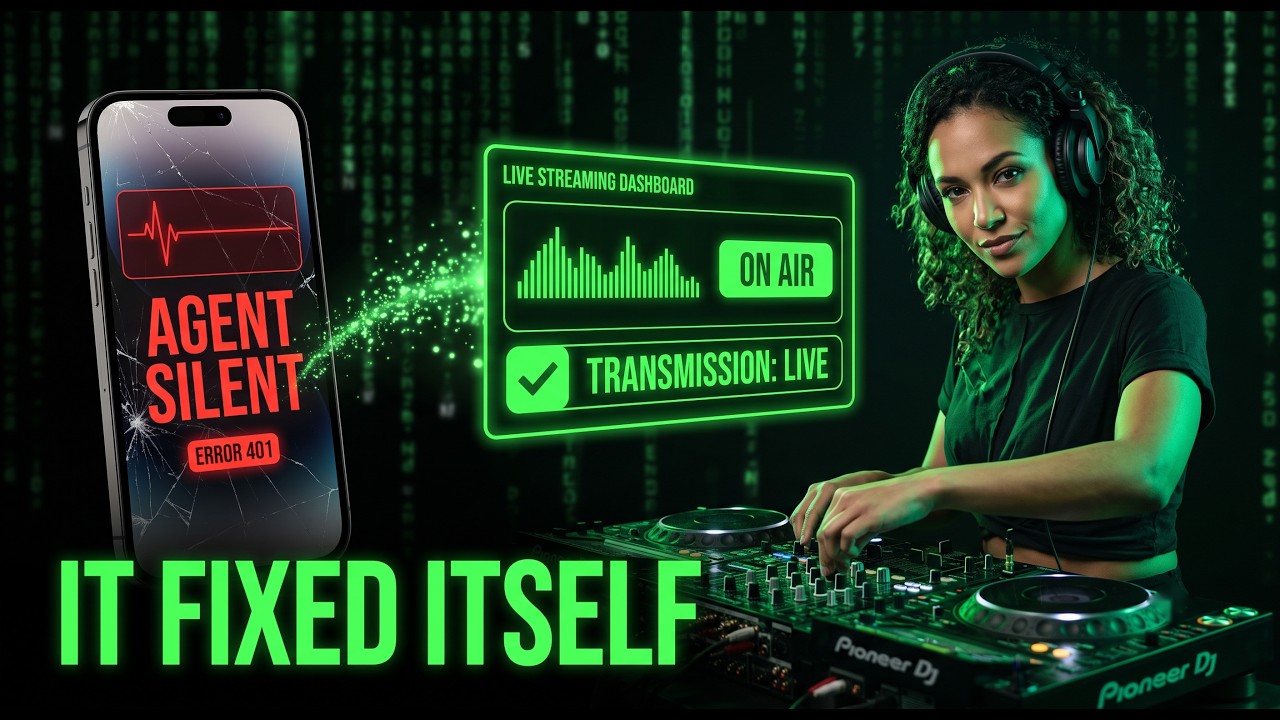 YOUTUBE63.6K views
Claude Code Now Runs My Voice Agent Business (LiveKit Dashboard + MCP)
ritzy782 months ago
![Set up a 100% Local AI Voice Agent in 10 minutes! [UPDATED] | (LiveKit)](https://i.ytimg.com/vi/VvGLdwSf41w/maxresdefault.jpg) YOUTUBE14.1K views
YOUTUBE14.1K viewsSet up a 100% Local AI Voice Agent in 10 minutes! [UPDATED] | (LiveKit)
ThanhYDavid2 months ago
 YOUTUBE454 views
Turn your NPC into a voice agent using LiveKit and Unity
livekit_io2 months ago
 YOUTUBE2K views
Anyone Can Hijack Your Voice Agent (Here's the Fix)
Speechmatics2 months ago
 YOUTUBE67 views
How AI Voice Agents Work? 🚀 LiveKit + Sarvam AI | Hindi | Chapter 5 | Ep 1
LoopKaka2 months ago
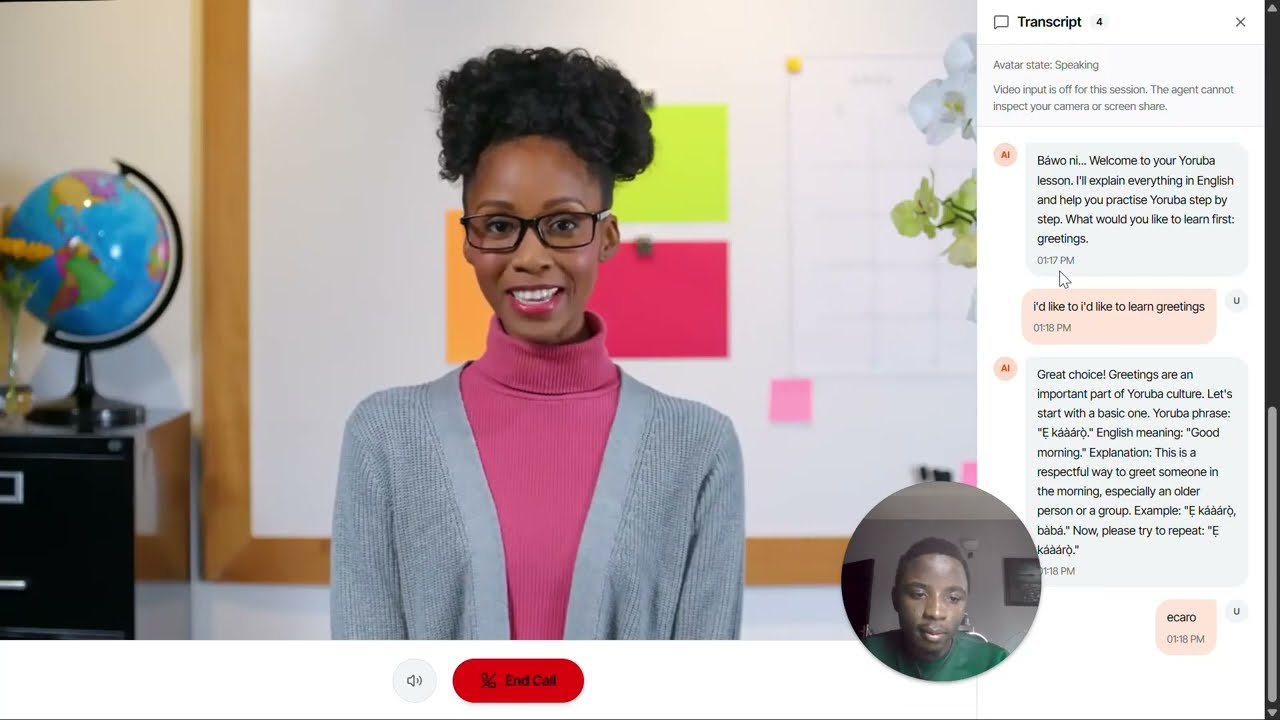 YOUTUBE43 views
How to Build a Yoruba Voice AI Agent (Step-by-Step)
vonativehq2 months ago
Capabilities
Key features
Agent Builder
Builds autonomous AI agents that plan and execute multi-step tasks for you
Voice Agent
Handles phone calls and voice conversations autonomously for support and sales
Chatbot Builder
Creates custom chatbots for your site or business without writing code
Customer Service Assistant
Answers customer questions and resolves support tickets through automated chat responses
The honest take
What users love & flag
Distinct themes surfaced across 37 reviews from 1 source — each grounded in real review text, ranked by how often it comes up.
Questions
Frequently asked
What is LiveKit?
LiveKit is an end-to-end framework for building and deploying production-ready AI agents that support real-time voice, video, and physical interactions. It handles the underlying real-time communication infrastructure while developers focus on their agent logic, supporting use cases like customer service systems, telephony applications, and multimodal AI assistants.
What programming languages and platforms does LiveKit support?
LiveKit provides comprehensive SDK support including JavaScript, Swift, Android, and Flutter for client-side development, plus Go, Node.js, Python, and Ruby for server-side implementation. It also includes Component Libraries for React, Android, Swift, and Flutter to accelerate development.
Can LiveKit handle phone calls and telephony integration?
Yes, LiveKit includes built-in telephony integration that allows you to create AI agents that can handle phone-based interactions. This makes it suitable for building call center applications, medical triage systems, and other telephony-powered AI agent workflows.
What AI services can I integrate with LiveKit?
LiveKit supports integration with various AI services including speech-to-text providers like Deepgram, large language models such as OpenAI's GPT models, and text-to-speech services like Cartesia. It also supports RAG integration for knowledge base access and vision capabilities for processing video input.
How can I build agents with LiveKit?
You can create agents using LiveKit's Agent Builder directly in your browser for a visual approach, or build programmatically using the Agent Framework available in Python and Node.js. The platform also provides a LiveKit CLI and comprehensive documentation to support development.
What makes LiveKit different from other AI chatbot platforms?
LiveKit focuses specifically on real-time, multimodal AI agent development rather than general-purpose chatbots. It emphasizes production-grade infrastructure with WebRTC transport, supports voice and video interactions, includes physical AI agent capabilities, and provides telephony integration - features not commonly found in standard conversational AI platforms.
Does LiveKit support multilingual AI agents?
Yes, LiveKit includes turn handling with multilingual detection capabilities. This allows you to build AI agents that can automatically detect and respond to multiple languages during real-time conversations.
Is there a hosted version of LiveKit available?
Yes, LiveKit offers LiveKit Cloud as a hosted service for deploying and scaling agents in production environments. The platform includes built-in observability features for monitoring agent behavior and performance, though specific pricing details are not publicly available in their documentation.
Compare LiveKit
Compare with another toolMore Like This
